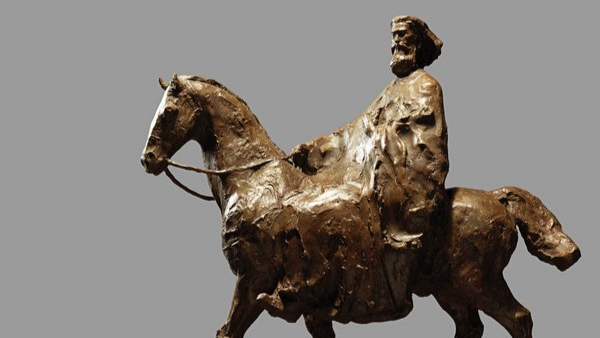
Marco Polo
Introduction
Marco Polo (1254-1324) is renowned as one of the most famous explorers of the medieval period. An Italian merchant from Venice, Marco Polo is celebrated for his extensive travels to Asia and for documenting his adventures in "The Travels of Marco Polo". The book is a detailed account of his journey to China, which was then ruled by the Yuan Dynasty (1271-1368). This work introduced Europeans to the rich culture and sophisticated civilization of China, challenging the prevailing misconceptions of the time. As the first medieval European to provide a comprehensive record of China, Polo's writings offer invaluable insights into the cultural exchanges between the East and West during the 13th century.
Early Life
Marco Polo was born in 1254 into a wealthy Venetian merchant family. His father, Niccolò, and his uncle, Maffeo, were successful traders who had already ventured into the East, reaching the court of Kublai Khan. Marco Polo grew up in Venice, a city that was a crucial hub for trade and commerce between Europe and Asia at the time. His early life was steeped in the mercantile culture of Venice, and he was likely educated in trading, finance, and the languages necessary for conducting business throughout the Mediterranean region. The absence of his father and uncle, who were on their journey during much of his youth, left a significant impression on Marco, fostering a sense of adventure and curiosity about the world beyond the familiar borders of Venice.
Journey to Asia
Departure from Venice
In 1271, Marco Polo set out from Venice on a journey that would take him across continents. He was accompanied by his father and uncle, who were returning to the court of Kublai Khan after their initial journey. The trio embarked on a long and arduous journey, traveling by land and sea across the Middle East, traversing the Silk Road, and passing through regions that are now part of modern-day Turkey, Iran, and Afghanistan. The journey was perilous, marked by harsh climates and challenging terrains, yet it offered Marco Polo invaluable exposure to the diverse cultures, peoples, and landscapes along the trade routes.
Arrival in China
After several years of travel, Marco Polo and his companions arrived in China in 1275. They reached the court of Kublai Khan, who ruled over the vast Mongol Empire. The emperor received them warmly, fascinated by the tales and knowledge they brought from the West. Polo quickly gained favor with Kublai Khan, who recognized the potential of having a Western perspective in his court. Marco Polo’s presence in China allowed him to witness the immense power and wealth of the Yuan Dynasty, which was unlike anything he had previously encountered in Europe.
Time in the Mongol Empire
Service to Kublai Khan
Marco Polo spent 17 years in the service of Kublai Khan, during which he was entrusted with various diplomatic and administrative tasks. His role offered him unparalleled access to the inner workings of the Mongol Empire and allowed him to travel extensively across China and other parts of Asia. Polo visited cities such as Beijing (then known as Dadu), Hangzhou, and Yangzhou, reporting on the advanced infrastructure, bustling trade, and the lifestyle of local inhabitants. His service to Kublai Khan provided insights into the sophisticated governance and administrative systems of the Yuan Dynasty, which he meticulously noted in his writings.
Description of China
In "The Travels of Marco Polo", the explorer described China as a land of wealth and sophistication, far exceeding the expectations of his contemporaries in Europe. He marveled at the grandeur of the cities, the efficiency of the postal system, and the innovations in infrastructure, such as the Grand Canal. Polo’s accounts highlighted the cultural richness and technological advancements of the Yuan Dynasty, including the use of paper currency, which was unfamiliar to Europeans at the time. His descriptions painted a picture of a thriving civilization and played a crucial role in altering the European perception of the East, which had been largely based on myth and speculation.
Return to Venice
Marco Polo returned to Venice in 1295, after spending over two decades in Asia. The journey back was arduous, involving a difficult sea voyage that took him through Southeast Asia and India. Upon his return, Polo found Venice at war with Genoa, and shortly afterward, he was captured and imprisoned by the Genoese. It was during his imprisonment that Marco Polo recounted his travels to a fellow inmate, Rustichello da Pisa, who transcribed the stories into what would become "The Travels of Marco Polo". The book was an immediate sensation, providing a rare glimpse into the wonders of the East and significantly impacting trade and exploration during the Age of Discovery.
The Book of Travels
Writing and Publication
"The Travels of Marco Polo", originally titled "Il Milione," was penned by Rustichello da Pisa, based on Polo’s narrations. Written in Old French, the book was later translated into several languages, spreading Marco Polo's accounts across Europe. The writing style combined factual descriptions with fantastical elements, which led some readers to question the authenticity of Polo’s claims. Despite skepticism, the book's vivid depictions of the East captured the imagination of Europeans and became one of the most popular and influential travel accounts of the medieval period.
Influence and Legacy
Marco Polo's book had a profound impact on European perceptions of Asia. It inspired explorers, merchants, and mapmakers, contributing significantly to the growth of trade and exploration in subsequent centuries. The detailed descriptions of wealth, culture, and foreign lands encouraged Europeans to seek out new trade routes and partnerships, laying the groundwork for the Age of Exploration. Figures such as Christopher Columbus reportedly carried a copy of Polo's book during their voyages, underscoring its influence on world history.
Historical Impact
The historical impact of Marco Polo's journey and writings extends far beyond his lifetime. His accounts of the East provided Europeans with their first comprehensive view of Asian culture, geography, and economy. By challenging existing misconceptions, Polo facilitated a new era of cross-cultural exchange and understanding. His travels highlighted the interconnectedness of the world, illustrating the potential for trade and diplomacy between distant civilizations. Marco Polo’s legacy endured through the centuries, influencing explorers, scholars, and writers who followed in his footsteps.
Legacy and Cultural Depictions
Literature and Film
Marco Polo's adventures have been immortalized in numerous literary and cinematic works. His life and travels have inspired countless adaptations, from books and plays to films and television series. These dramatizations often blend historical fact with fiction, capturing the spirit of adventure and discovery that defined Polo’s journey. The enduring fascination with Marco Polo's story underscores his cultural significance as a symbol of exploration and the quest for knowledge.
Exploration and Trade
Marco Polo's legacy is deeply intertwined with the history of exploration and trade. His journey along the Silk Road exemplified the exchange of goods, ideas, and cultures that characterized the medieval world. Polo's detailed accounts of trade practices, local customs, and exotic products fueled European interest in establishing direct trade routes with Asia. His influence is evident in the subsequent voyages of discovery that reshaped global commerce and led to the emergence of a more interconnected world.








